
Articles
Putting your motorcycle away for winter without a spring headache
Fuel, tyres, battery and a cover: what actually needs doing before storage? A garage-friendly guide to getting the bike ready for its next season.
 fruskate
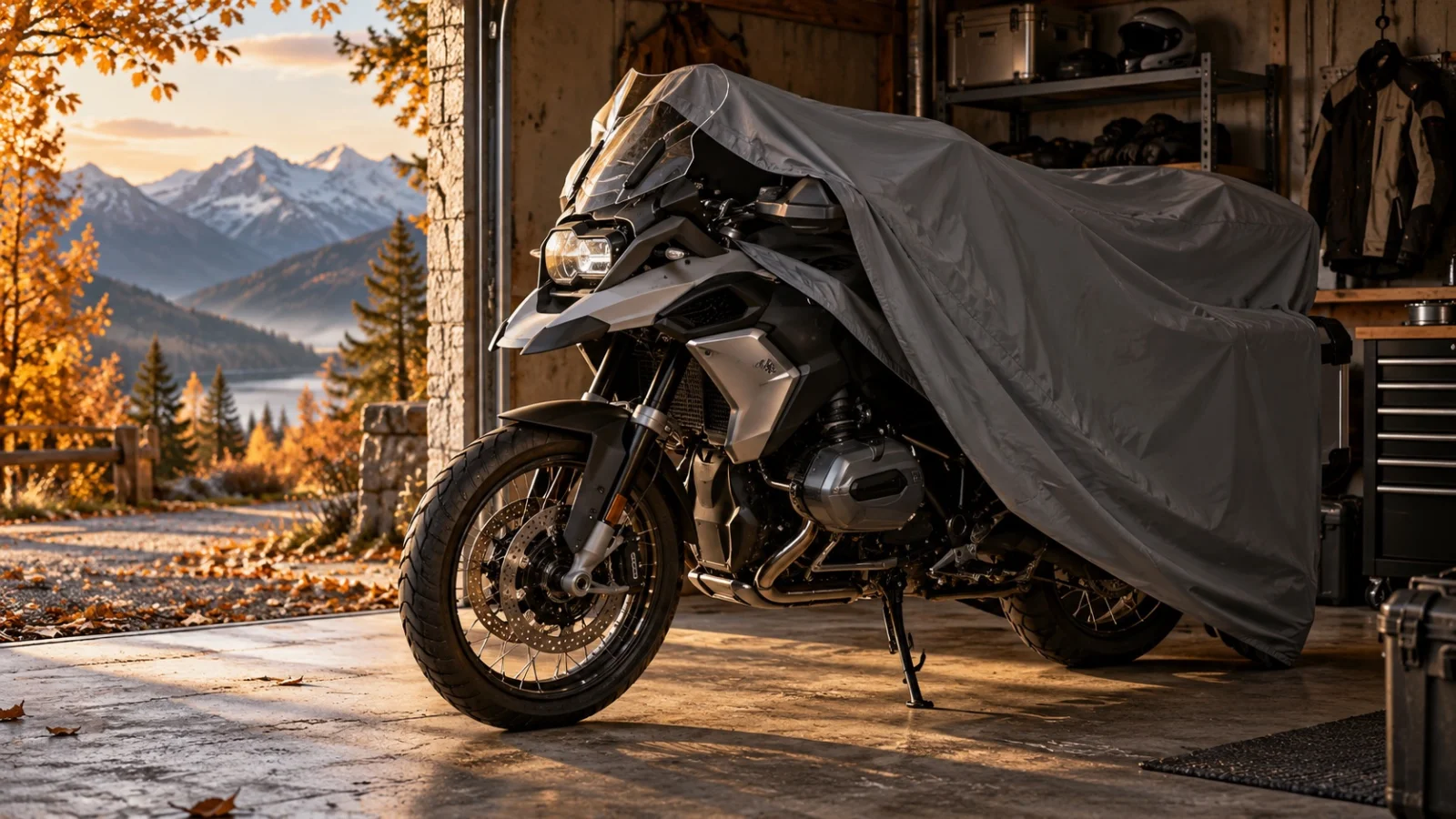
Rolling the bike into the garage and pulling a cover over it is a tempting way to finish the season. A little preparation now, though, is much easier than finding a flat battery and an unexplained puddle on the first sunny weekend.
Find the storage section in your owner's manual, then take an honest look at the garage. A dry indoor space and a damp outdoor shelter aren't the same. Plan for the temperature and moisture the bike will actually experience.
Put it away clean and dry
Wash off dirt and road salt, let the bike dry and look over hoses, fasteners and the underside of the engine. Leaks are easier to spot when everything isn't covered in grime.
Keep protective products off brakes, tyre tread, the seat and grips. Care for the chain with suitable products and complete any service that's due. We cover the oil decision in this separate guide.
Let the bike cool before covering it. Choose protection that keeps rain out while allowing ventilation; wrapping a wet bike tightly in plastic keeps moisture inside. Honda's storage advice also stresses cleaning and suitable protection.
What about the fuel tank?
“Always full” and “always empty” are both too simple. Tank material, fuel system and storage duration matter. A metal tank needs protection against internal corrosion, while a carburettor may require steps that an injected bike doesn't.
Read your model's instructions before draining anything. If they call for a stabiliser, check compatibility, dose and how to use it. A stabiliser doesn't restore already degraded fuel. Don't fill beyond the specified level or drain petrol into an unsuitable open container. Use a workshop if you can't handle fuel safely where you are.
Fluids, battery and tyres
On a liquid-cooled bike, check that the coolant is suitable for the garage's lowest likely temperature. Adding plain water can reduce freeze protection; mixing unfamiliar products isn't a shortcut. Brake fluid follows a service interval, not just a colour check.
Decide how you'll monitor and charge the battery. Alarms and trackers can use power with the ignition off, and AGM and LiFePO4 need different care. See the battery guide.
Set tyre pressure as instructed for storage. Don't invent an extra winter allowance. Use stable, suitable stands if lifting the wheels; bricks aren't a sound substitute. If the bike stays on its tyres, check the manufacturers' advice on repositioning it. Michelin advises avoiding prolonged loading of one spot, sunlight, excess heat and chemicals.
Leave a note for your future self
Write down the date, mileage, work completed, fuel preparation and battery-check plan. List anything removed, disconnected or covered. If the manual calls for closing an opening, leave an obvious reminder to uncover it before starting.
Brief weekly engine starts don't replace storage preparation or guarantee a charged battery. Never run the engine in an enclosed garage.
In spring, a successful start is only one check. Restore disconnected items, then inspect fluids, leaks, tyres, brakes, lights and controls before riding.
Save the checklist while the season is still fresh in your mind. If you're choosing winter storage, ask local riders in MotoASIA about access, humidity and power in the places they've used.