
Articles
Should you lower motorcycle tyre pressures in cold or wet weather?
The gauge reads lower than it did in summer, and someone recommends letting out more air for rain. Here's how to make sense of the advice.
 fruskate
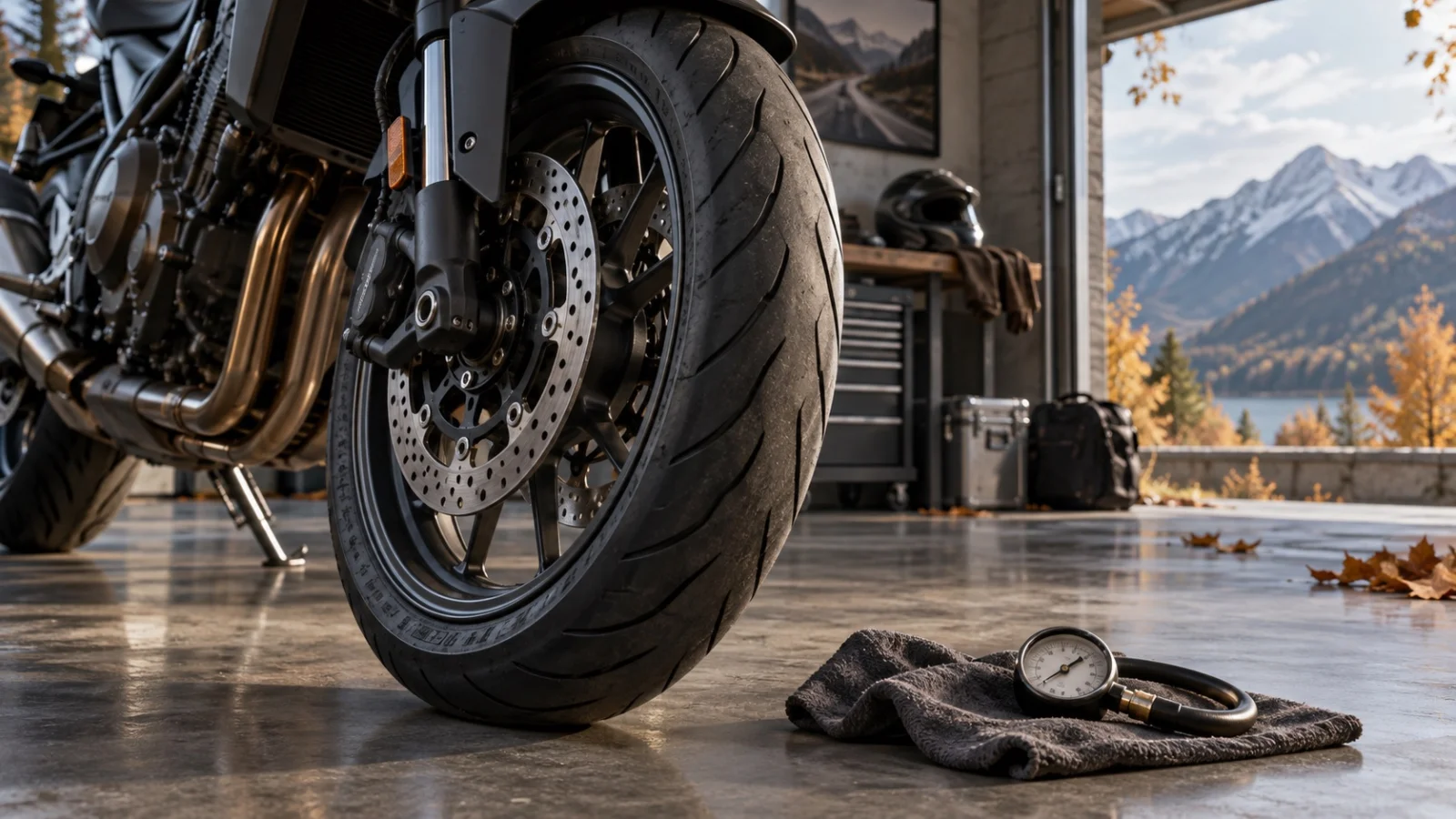
You check the tyres on a chilly morning and get a lower reading than you remember from summer. Then a riding chat suggests dropping them further for grip in the wet. On public roads, that isn't a good basis for setting pressures.
Use the pressure recommended for your bike, tyres and load. Don't reduce it at random because the weather is cold or wet. Track and off-road setups serve different purposes.
Compare readings taken in the same conditions
A warm garage, a cold driveway and a tyre straight after a ride give you different starting points. Temperature affects pressure, so those readings don't tell the same story.
A cold tyre hasn't been warmed by riding and is at the surrounding temperature. Checking before a ride, after sufficient time parked, is usually convenient; use the manufacturer's waiting-time guidance. Michelin explains cold pressure checks here.
Use a gauge, rather than judging by squeezing the tyre. If a result looks odd, verify it with a reliable instrument. Forecourt gauges can differ from yours, and mixing up bar and psi makes comparison pointless.
Find the setting for your bike
Look in the manual or on the bike's pressure label. Front and rear values may differ, and carrying a passenger or luggage may have its own setting. Don't add an arbitrary amount to both tyres.
A number on the tyre sidewall may relate to maximum load; it isn't automatically your everyday target. After changing tyre size or type, confirm fitment and pressure advice with the manufacturer or installer.
“I always use two bar” leaves out the bike, tyres and load. Those details matter more than how confidently the advice is given.
Leave hot tyres alone
Pressure can rise as a tyre warms during a ride. Letting it down to a cold target now leaves it underinflated when it cools. Rain doesn't change that.
If you must check on the road, follow the manufacturer's hot-reading instructions and check cold later. TPMS is useful for monitoring, but a moving-bike reading isn't automatically comparable with the cold target.
Suitable tyres, smooth inputs, sensible speed and extra following distance help on wet roads. Guessing a lower pressure can affect handling and damage the tyre. We discuss the riding side in the cold-weather guide.
Losing air again?
Recheck after adjusting, replace valve caps and inspect valves, tread, sidewalls and rims. If one wheel quickly loses pressure again, don't blame autumn.
A puncture, damaged valve, crack, bulge or unusual vibration needs professional inspection before the next ride. Whether a repair is suitable depends on the damage and the manufacturer's requirements.
Save your front and rear settings on your phone. When asking riders in MotoASIA, give the model, tyres and load; it helps turn a general argument into useful advice.