
Articles
Motorcycle tyre age and why tread is only half the story
Low mileage can leave old tyres looking deceptively fresh. Read the date code, inspect their condition and check the manufacturer’s guidance.
 fruskate
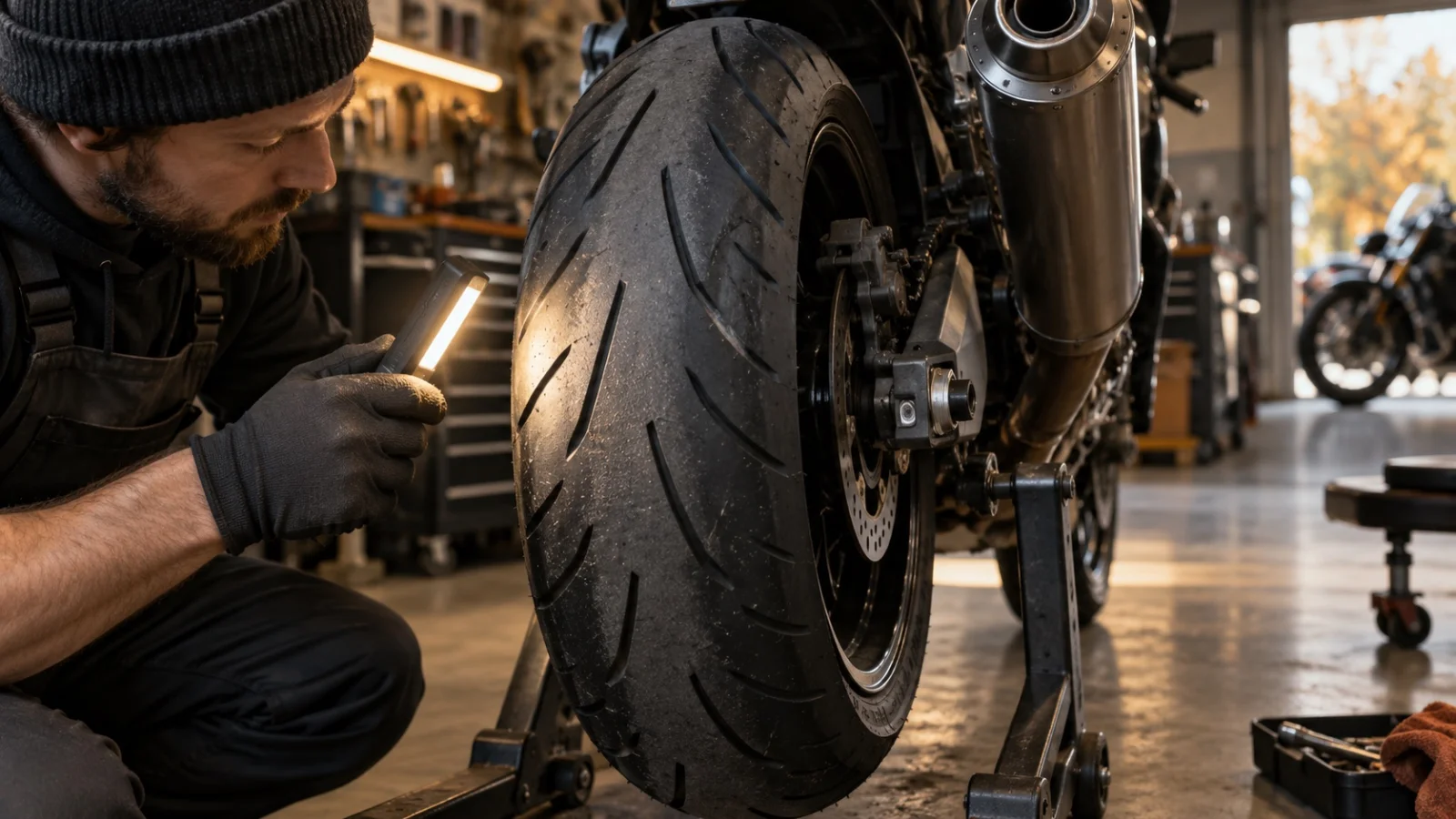
A bike used only occasionally can keep its tyres for years. The grooves still look deep, so replacing them feels wasteful. But tread tells only part of the story. Age, storage, damage and running pressure all belong in the decision.
Find the manufacturing date
The date marking normally has four digits: two for the week and two for the year. A code of 3521 means week 35 of 2021. It dates the tyre, not the motorcycle or your purchase. The complete code may be on the other side. Ask a tyre shop for help rather than crawling under an insecurely supported bike to find it.
A recent date does not make a damaged tyre serviceable. Nor does an older date reveal how carefully a tyre was stored before fitting. Be cautious about discounted old stock with an unknown storage history.
Inspect more than the grooves
Check the whole circumference using a safe way to turn the wheel. Cuts, cracking, bulges, embedded objects and unusual wear need attention. A photo in a chat cannot establish that a crack is harmless. Measure tread in several places and follow the applicable manufacturer's guidance and local requirements.
If a tyre keeps losing pressure, find the cause instead of topping it up indefinitely. Running flat can cause damage inside that is not obvious outside. Have a professional inspect it. Our cold-weather tyre pressure guide explains how to make useful pressure checks.
Put age recommendations in context
Michelin recommends annual professional checks after five years of use, and precautionary replacement ten years after the manufacturing date, even if a tyre still appears sound. That is Michelin's guidance, not permission to keep every tyre until its tenth birthday. Your tyre maker and motorcycle manufacturer may specify something different.
Damage or an unsuitable condition can mean replacement much sooner. Trying hard braking or extra lean on a public road is not a way to assess old rubber. Getting through one bend says little about the margin available for the next unexpected situation.
If the history is unknown, bring the date code and what you know about storage to a tyre specialist. Ask why they recommend keeping or replacing it, and ensure any replacement has the correct size and ratings for your bike. That gives you a useful answer about your tyres, rather than another argument about a universal expiry date.
Date codes and replacement guidance
Michelin motorcycle tyre replacement advice, Michelin manufacturing date explanation.