
Articles
How to ride a motorcycle at night
A familiar bend becomes harder to read after dark. Prepare your visor and lights, leave more space and choose a pace that works with what you can see.
 fruskate
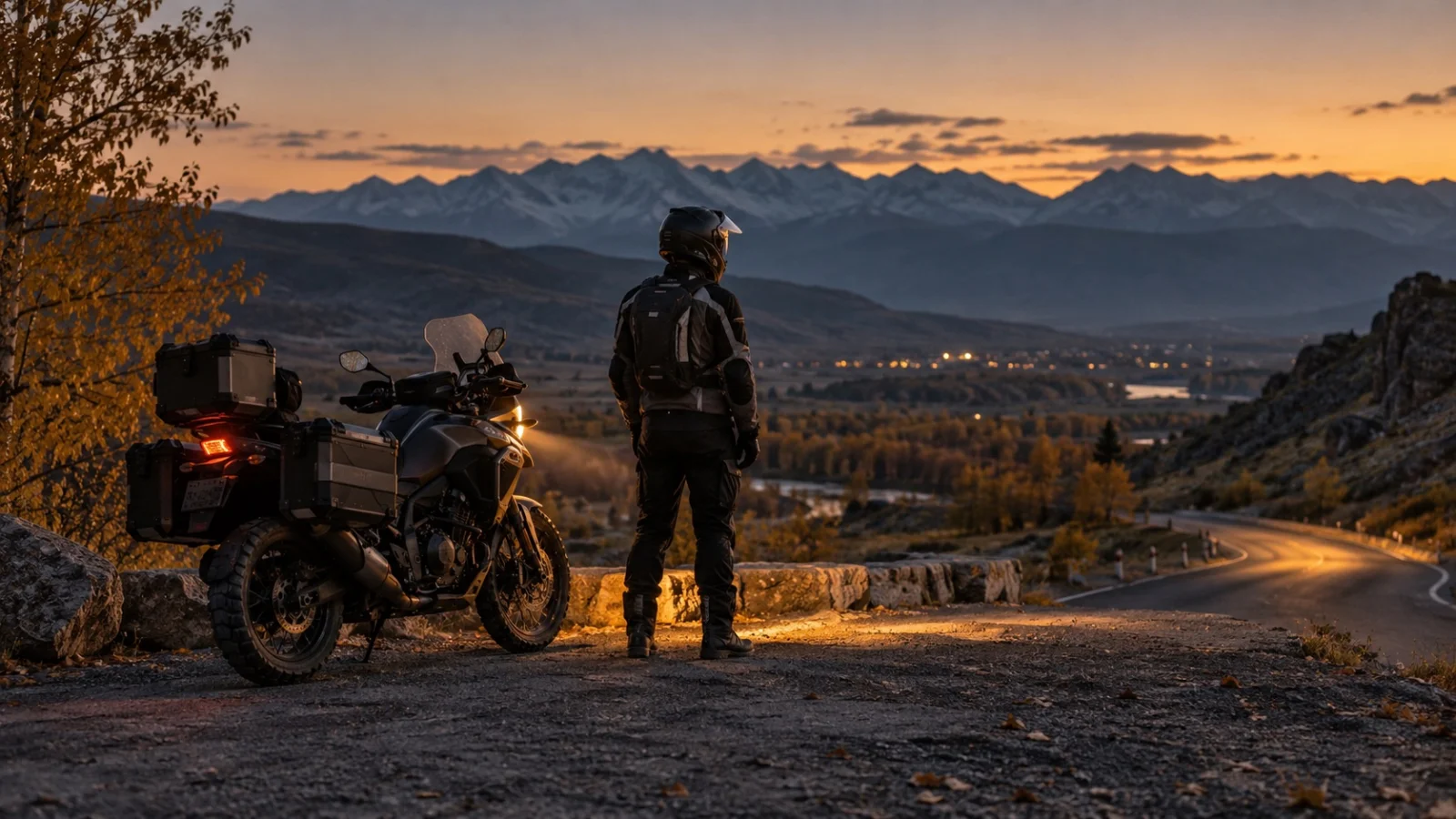
You left in daylight, stayed longer than planned and now the final part of the ride is in darkness. The road may be familiar, but the view is not. A pothole, loose material in a bend or someone walking beside the road can appear much later than it would during the day.
The useful rule is simple: ride at a speed that lets you stop within the clear stretch of road you can actually see. A posted limit does not guarantee that your headlight reaches far enough. Rain, fog and bends can shorten that view considerably.
Start with the lights and visor
Before leaving, check low and high beam, the tail light, brake light and indicators. Set the headlight according to the owner manual and account for the load. Dirt on the lamp or a change in the bike's attitude with a passenger can compromise the useful beam.
Swap a tinted visor for a clear one before it gets dark. Clean both sides using the method approved for that visor. Scratches and smears become much more distracting under oncoming headlights. Replacing a damaged visor may be more useful than adding another lamp. If the visor fogs and you cannot see clearly, stop somewhere safe and restore the view.
Any extra lighting needs to suit the motorcycle, be installed correctly and comply with local requirements. More brightness does not automatically mean a better beam.
Give yourself room to decide
Leave more following space. The car ahead can hide a pothole until the last moment, and its sudden braking can leave you with little time to respond. Do not follow close behind it as a way of borrowing its lights.
Set your pace before a bend. Your headlight will not reveal the entire curve or every object beyond it. At junctions and entrances, allow for a driver who sees a light but misjudges how far away you are. Reflective material can help you stand out; it cannot make another driver give way.
The change from a well lit town to an unlit road is a reason to reassess your speed. Dusk deserves the same attention. It can feel light enough for daytime confidence while small hazards have already become difficult to pick out.
Tiredness changes the plan
Missing signs, noticing turns late or staring at one point without taking in the scene are reasons to find a safe stopping place. Telling yourself that there are only a few miles left does not restore concentration.
An overnight stop or an earlier finish is a sensible part of trip planning, especially after a long day. If the road is also wet and cold, read the separate guide to riding in cold weather and rain. Removing one difficult condition can make the remaining ride much more manageable.