
Articles
Does your motorcycle chain need lubricating after every rainy ride?
You're home, your kit is soaked, and the chain is the last thing you want to think about. Here's what to check before reaching for the spray.
 fruskate
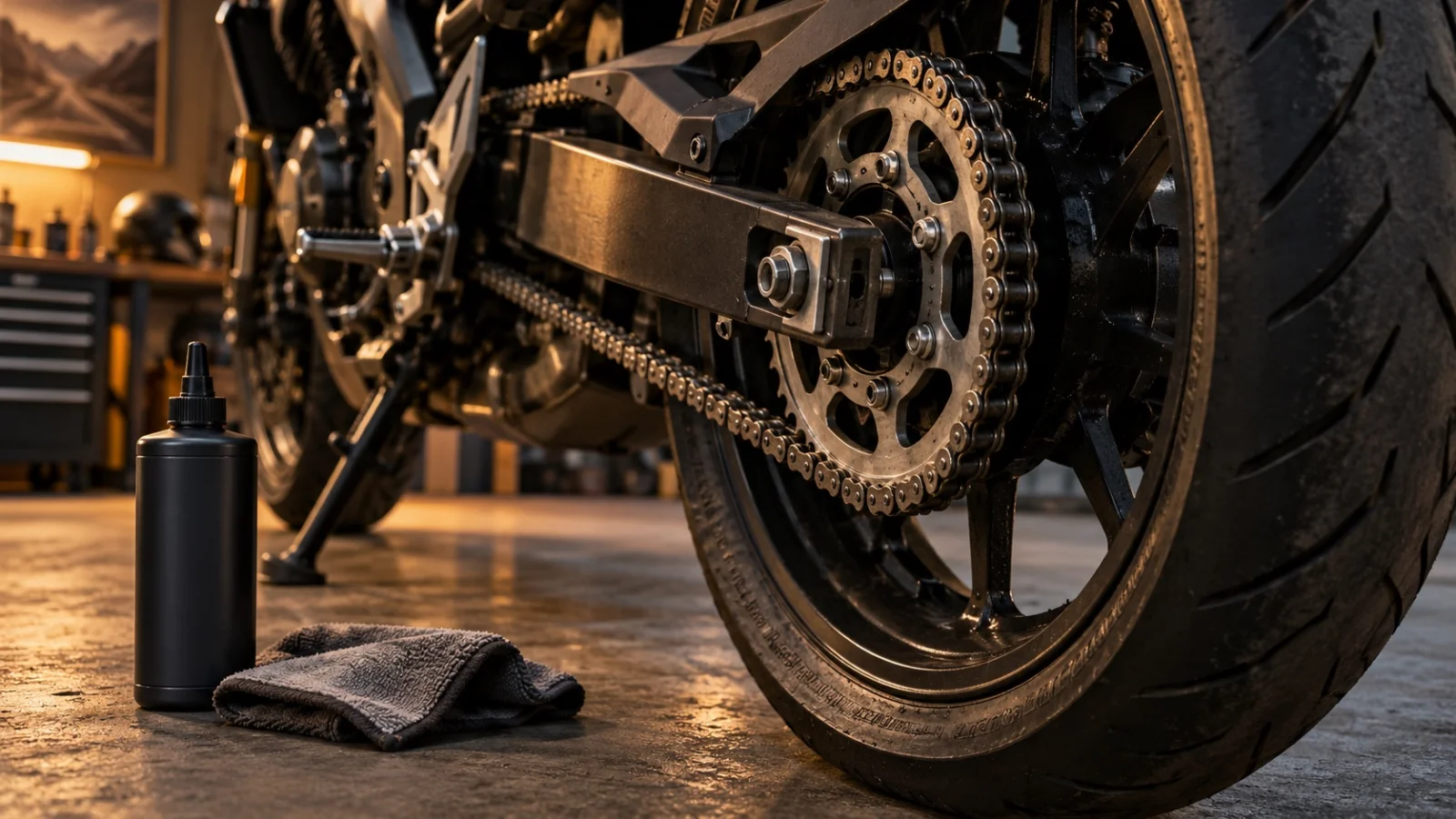
After a wet ride, taking off your gear feels like enough work for one evening. Give the chain a look before leaving it, though. Water and road grime can make your usual mileage-based routine less useful.
That doesn't mean drowning it in lubricant after every shower. Check its condition and follow the chain maker's advice: clean when needed, let it dry and apply compatible lubricant.
Engine off, every time
Never clean or lubricate a chain with the engine running and the bike in gear. A powered wheel can pull fingers, cloth or a brush into the sprocket.
Switch the ignition off and make the bike stable. Use a suitable stand if needed, turn the wheel by hand and stay clear of pinch points. Watch out for a hot exhaust too.
Sealed chains need suitable products
O-ring and X-ring seals keep factory lubricant inside the links. Harsh solvents and aggressive cleaning can damage them; spraying more lubricant outside won't undo that damage.
Check the product against your chain maker's instructions. D.I.D's FAQ, for example, advises against kerosene. “Everyone cleans chains with it” isn't a universal approval. Petrol, strong solvents, wire brushes, steam and high-pressure jets at the seals are poor choices too.
Remove dirt with an approved cleaner and a soft tool. If the chain is clean and recently serviced, inspect it before deciding it needs a complete wash. Let it dry before lubricating.
More spray isn't more care
Follow the chain and product instructions for application points, quantity and time before riding. Wipe away excess. A thick layer collects dirt, and fling-off can reach a tyre or brake.
Protect those parts while working. If brake pads are contaminated, wiping the disc isn't enough; have the brakes assessed before riding.
A dry commute and a muddy ride home in heavy rain don't leave a chain in the same condition. Check after rain or washing instead of relying on one supposedly universal kilometre interval.
Don't tighten away the slack
Suspension movement changes the distance the chain must span. Setting it tight just to stop it moving can overload components.
Your manual specifies the measuring position, slack range and adjustment procedure. Wheel alignment and correct fastener torque matter afterwards. Ask a mechanic to demonstrate on your bike if you're unsure.
Stiff links, missing seals, serious rust, uneven slack or worn sprocket teeth need inspection. Lubricant doesn't restore a worn set. D.I.D recommends replacing a worn chain and sprockets together; any connecting link must match the exact chain.
Once it's checked and cared for, you can get back to drying your gloves. See our cold and wet riding guide for the rest of the trip, or find fellow owners through MotoASIA.