Articles
Which tools should you carry on a motorcycle trip?
A small kit that fits your bike is more useful than a heavy box of unsuitable tools. Pack for familiar tasks and prepare a recovery plan as well.
 fruskate
A kit with dozens of pieces looks reassuring in the shop. On the road, you discover that the required spanner is missing, the screwdriver does not fit or the tool cannot reach the fastener. A useful travel kit starts with your particular motorcycle and tasks you know how to do.
Carrying tools does not mean you have to fix every fault at the roadside. Stopping safely, explaining the problem and arranging recovery can be the most useful action.
Begin with the manual and supplied tools
Check which inspections and simple jobs the manufacturer assigns to an owner. Look through the original toolkit, if supplied. Know how the seat opens, where the fuses are and which fasteners your luggage uses.
At home, with the motorcycle securely supported, try the tools for those ordinary jobs. Spanners need the correct size and screwdrivers the correct profile. A wet shoulder after dark is a poor place for your first attempt at dismantling something. Where a specified tightening torque matters, a short ordinary spanner is no substitute for the right equipment and instructions.
Give each item a purpose
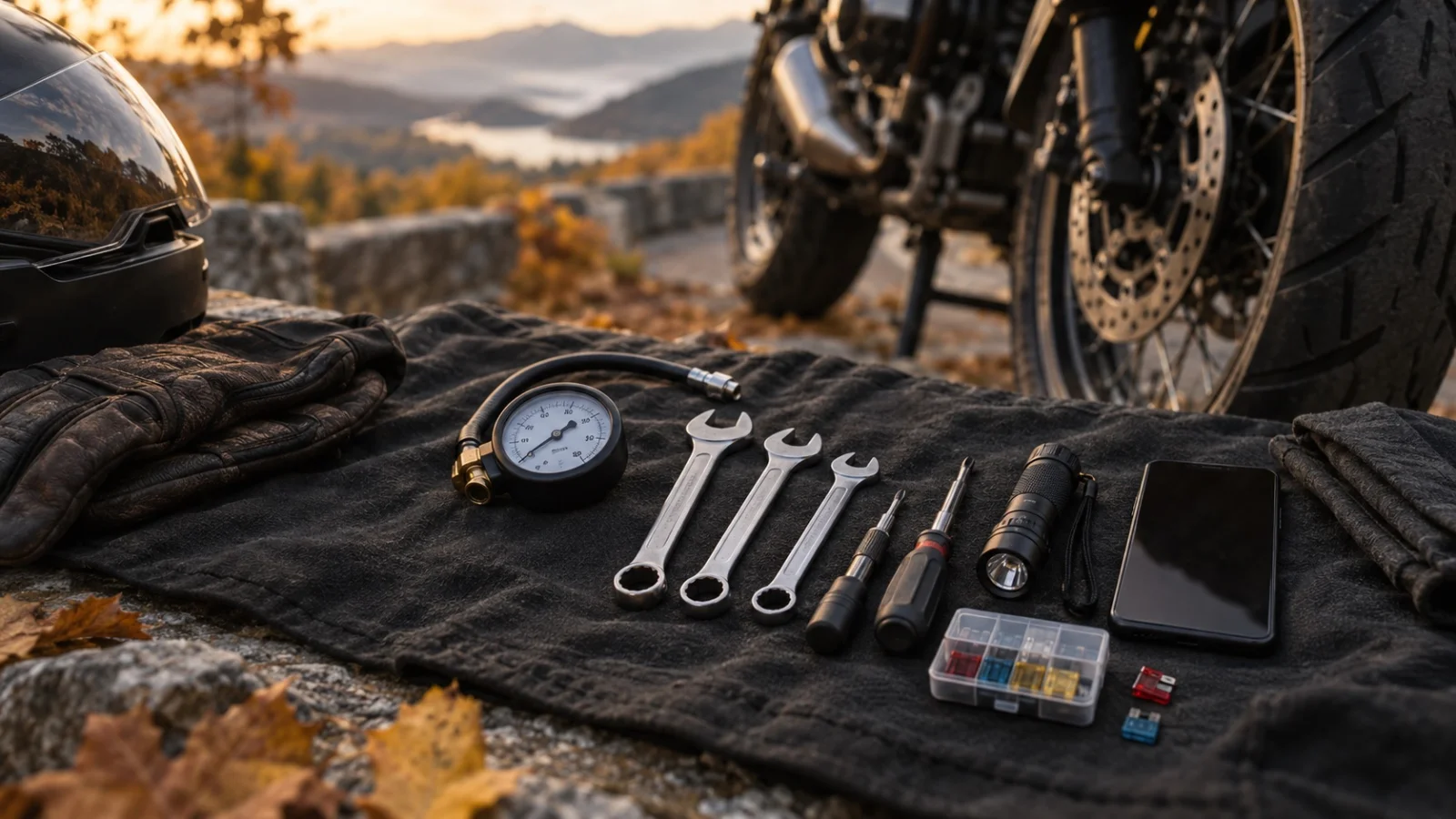
A practical starting kit might include:
- Spanners and bits that fit accessible bike and luggage fasteners.
- A tyre gauge that reaches your valve stems comfortably.
- A compact torch, work gloves and a clean cloth.
- Fuses of the specified type and rating, if you know the manual's replacement procedure.
- A few suitable cable ties and a small amount of tape for noncritical securing tasks.
This is a starting point rather than a universal kit. Add an item when you have a specific job for it. A cable tie might secure loose trim; it cannot repair a brake, steering fault or fuel leak.
Do not replace a fuse with a higher rating or an improvised wire bridge. If a correct replacement blows again, the electrical fault needs investigation rather than an endless supply of fuses.
Prepare assistance too
Save motorcycle recovery and workshop contacts for the route. A charged phone, charging cable, offline map and clear location information may become useful sooner than the spanners. Check the terms of assistance if your insurance or a separate agreement provides it.
Choose tyre equipment according to the wheel type and manufacturer's guidance. Owning a repair kit does not make every puncture suitable for repair or remove the need for subsequent professional inspection.
Recognise when a roadside task is over
A fuel or brake fluid leak, damaged wheel, sticking throttle or doubtful brake performance is not a reason to plan a slow ride to somewhere else. Arrange safe transport suitable for your motorcycle.
Store the kit securely where you can reach it without unpacking everything. After the trip, remove things you never need and replenish what you used. Over time it becomes equipment that serves you, rather than a heavy purchase that simply comes along for the ride.