
Articles
Riding a motorcycle in crosswinds: when to stop
A steady crosswind is one thing; a sudden gust after shelter is another. Anticipate exposed sections and keep room to respond without forcing the ride.
 fruskate
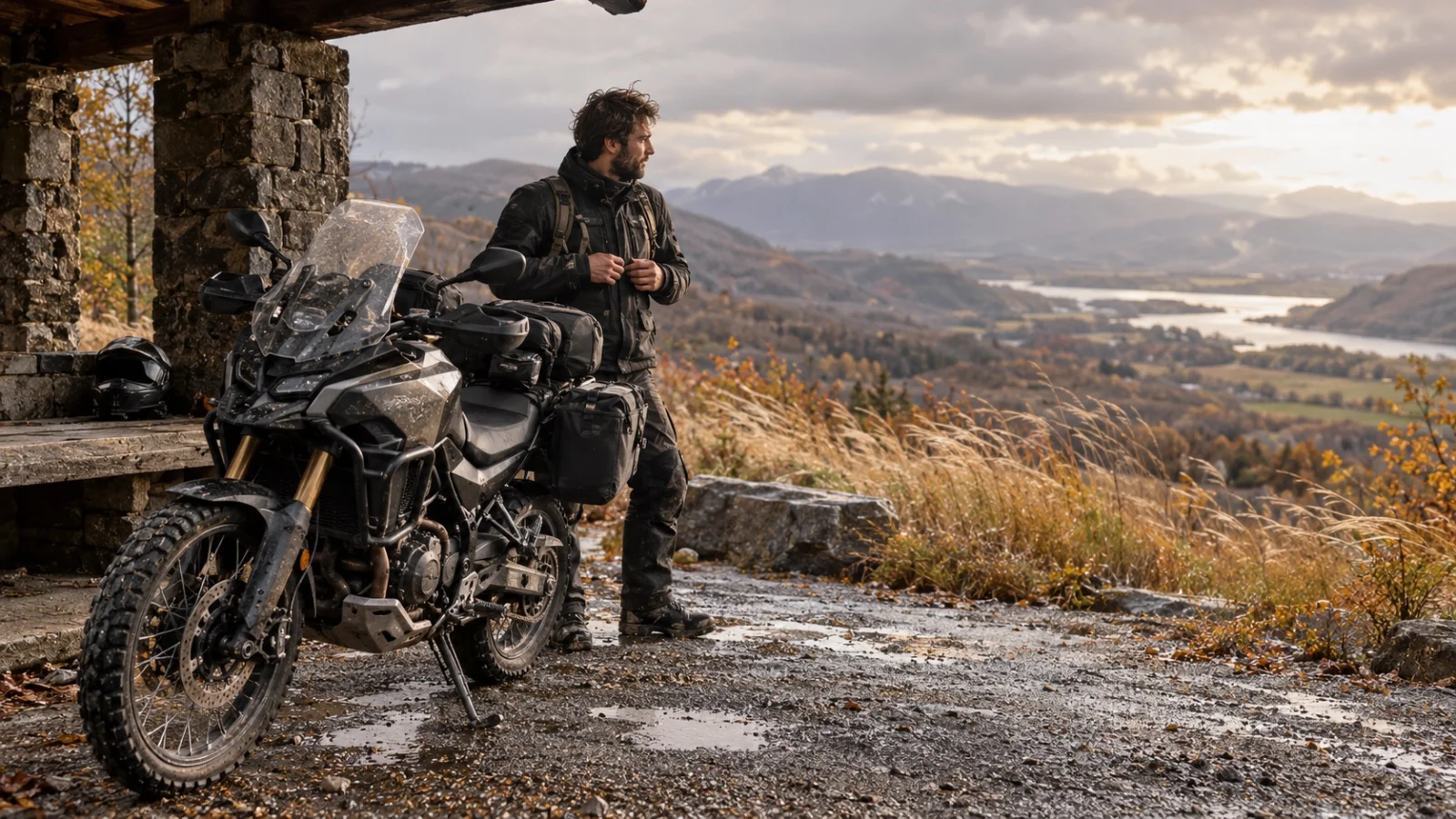
The road was comfortable between buildings. As it opened into a field, the bike suddenly moved sideways. That change is often the unsettling part of crosswinds: shelter ends, a truck passes or the next gust is stronger than the last.
There is no single safe wind speed for every motorcycle. Gusts, direction, road conditions, luggage and rider experience all matter. If you cannot reliably hold your position within your lane, find a safe place to stop. The fact that other riders are continuing does not settle the decision for you.
Expect the shelter to end
Look at gust forecasts and severe wind warnings when planning the ride, rather than checking only rain and temperature. A route across open land, bridges or a mountain pass may need a different plan from a short urban journey.
On the road, notice where conditions could change: the end of a line of buildings, a gap in trees, a bridge or the exit from a cutting. Moving branches, grass and blowing dust can help you recognise an exposed section. Adjust your pace before you reach it.
Leave room to respond
Avoid gripping the bars until your hands are rigid. Keep your arms available for smooth control and your feet on the pegs. Look along the route you want to follow rather than staring at the road edge you are worried about reaching.
Choose your lane position with the wind, surrounding traffic and surface in mind, keeping room for a correction. There is no useful rule that says you must always hug one edge. Riding close to the centre line or shoulder just to hold a predetermined position can remove your margin.
Airflow changes around large vehicles. Do not linger beside a truck or tuck close to its side as though it were reliable shelter. An overtake still needs to be legal and have a clear view and enough space. Strong gusts may be a reason to leave it for later.
Check what you are carrying
Tall bags and wide cases can change how the motorcycle feels in wind. Follow the luggage manufacturer's mounting instructions, secure loose straps and use the bike manual for load and setup guidance. Stop before tightening a bag; it is not something to do while moving.
Wait somewhere suitable
Choose a place away from traffic where the motorcycle can stand securely. A narrow bridge shoulder, a questionable tree or an exposed spot beside loose structures is a poor waiting place.
A worsening forecast may mean a different route, departure time or overnight stop. Resume when conditions let you maintain calm control, rather than when waiting becomes frustrating. Gusty riding uses up attention, so reassess your energy as well as the weather after a demanding stretch.