
Articles
Dropped your motorcycle? What to check before riding
A parking drop can leave more than scratched paint. Check the controls, leaks and wheels before deciding whether the bike can be ridden.
 fruskate
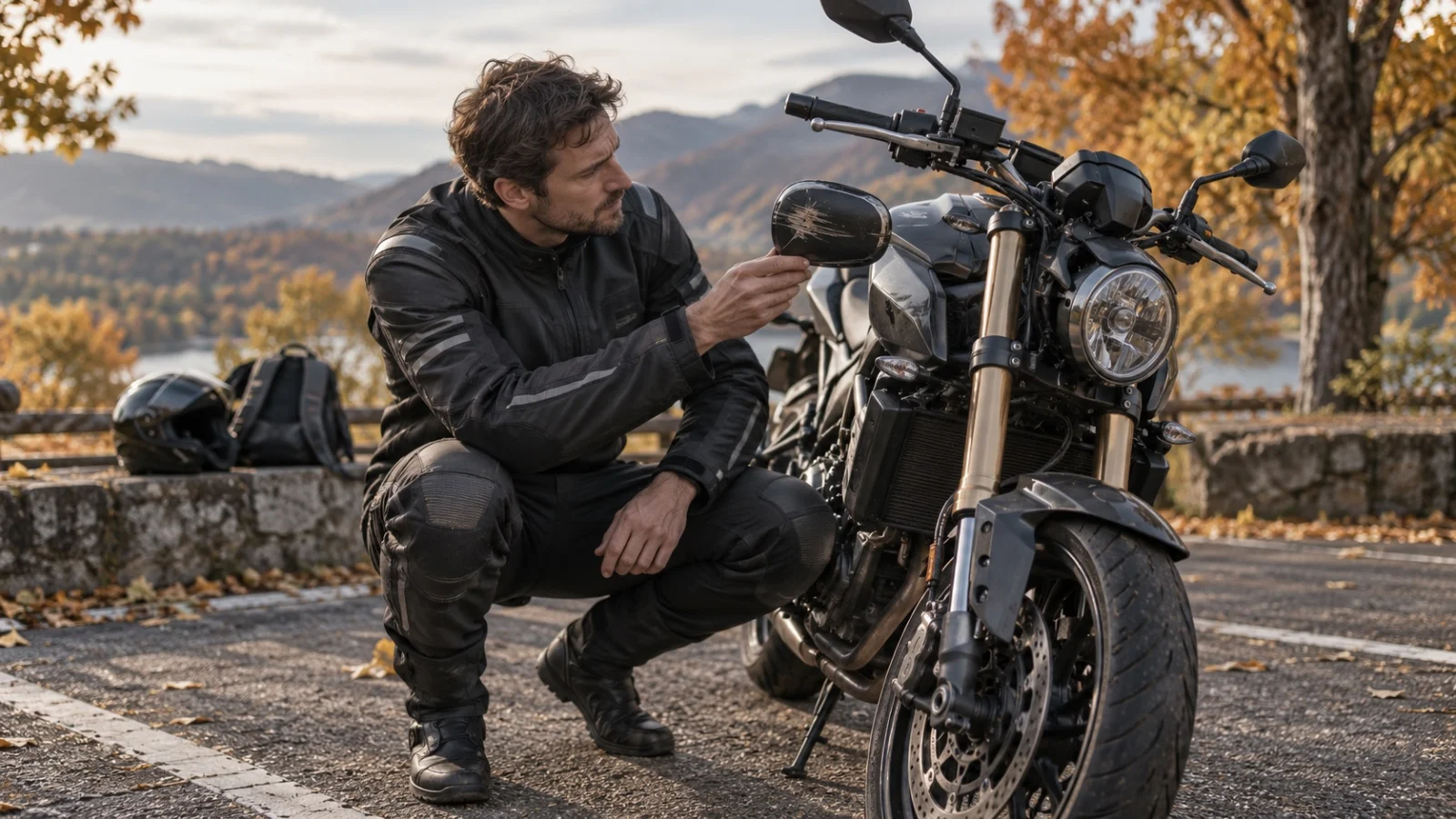
The stand sank into soft ground, your foot slipped during a turn, or the bike simply got away from you. It is tempting to lift it quickly and ride off before anyone notices. Take a breath first. A scuffed fairing and a jammed throttle can follow the same apparently harmless drop.
Do not restart the bike as soon as it is upright. Check yourself, secure the situation and inspect the motorcycle. An engine that starts is only an engine that starts; it tells you very little about the brakes or steering.
Deal with the situation first
Stop the engine if it is still running and switch off the ignition. If this happened beside moving traffic, do not put yourself in danger to protect the bike. An injured person takes priority over an inspection.
A heavy motorcycle on a slippery shoulder is a good reason to ask for help. Avoid a hurried lifting attempt that could trap you underneath it or bring you into contact with a hot exhaust. If you smell fuel, see a significant leak or notice battery damage, leave the ignition off and arrange safe assistance.
Look beyond the scratched panel
Once the bike is stable, look underneath it and inspect the side that hit the ground. Oil, fuel, coolant or brake fluid needs an explanation. Wiping the patch away does not make the cause disappear.
Work through the parts you will depend on during the next ride:
- Levers and pedals should be secure, intact and free to move.
- The handlebars should turn freely without pulling cables or hoses tight.
- The throttle should return on its own with the bars in different positions.
- Wheels and tyres should have no visible damage, and both brakes should work.
- Footrests, mirrors and the side stand should be firmly attached.
A shifted bar end can press against the throttle grip. A bent lever may still look usable while limiting its movement. That is why the controls deserve more attention than the cosmetic damage.
Why the engine may not restart
Some motorcycles stop the engine after a tip over through a lean angle sensor. The 2024 Honda CB500F, CBR500R and NX500 manual, for example, gives a reset procedure. Check your own manual rather than assuming every model works the same way. Do not bypass a safety system or repeatedly crank the starter without finding the cause.
When recovery is the sensible choice
A leak, damaged wheel, sticking throttle, changed steering alignment or abnormal brake operation means the ride is over until the fault has been assessed. A high speed test is no way to settle doubts about a safety critical part.
Arrange a workshop inspection if the impact involved the controls or running gear, even when the damage looks minor. For the next parking spot, check the slope and the ground beneath the stand. That small pause may prevent the next drop.