
Articles
Do you need to warm up a motorcycle before riding?
Ten minutes at idle, immediate departure or waiting for the revs to settle? The engine’s instructions matter, and a gentle start to the ride matters more than a stopwatch ritual.
 fruskate
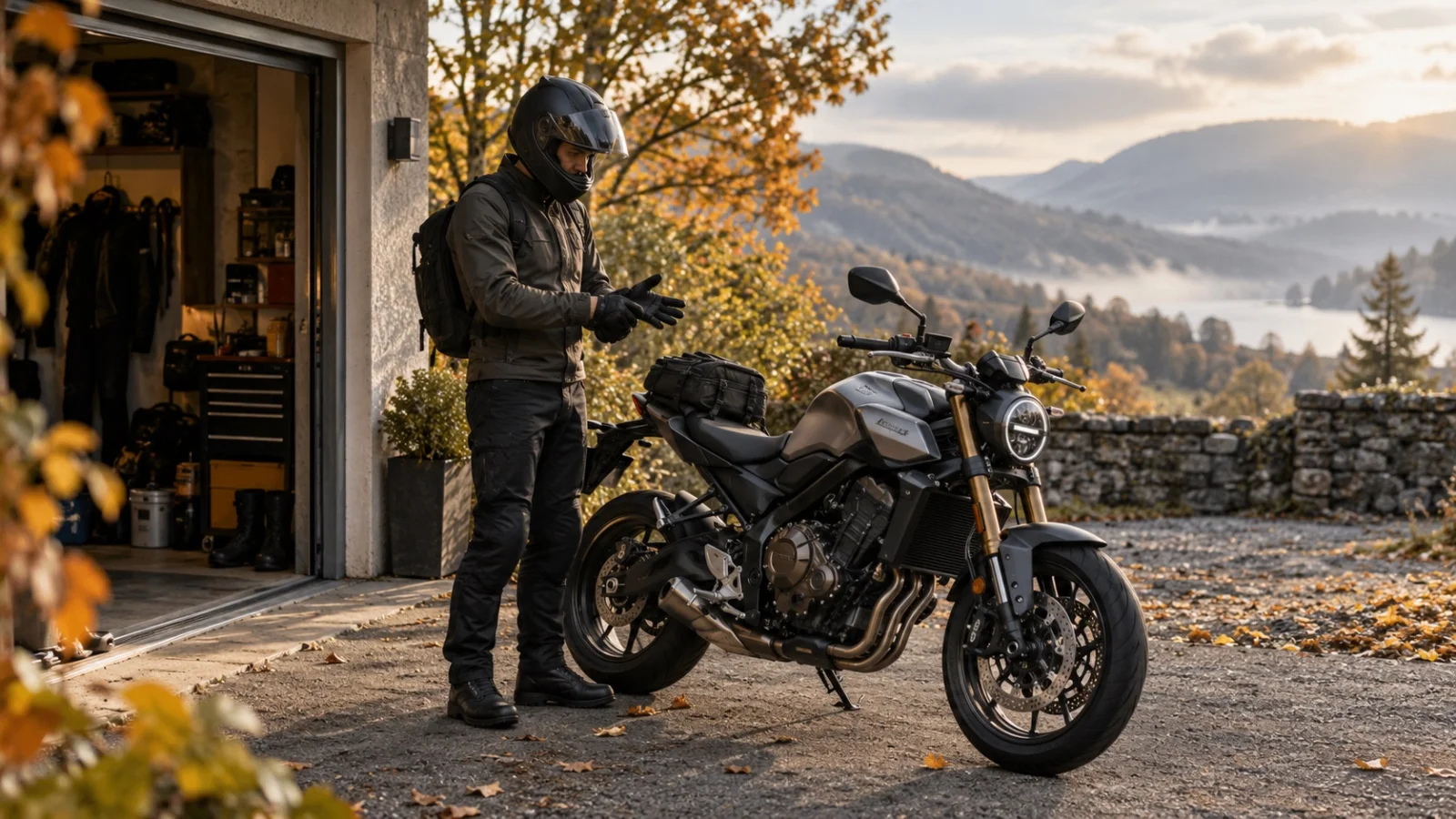
Waiting beside a running bike until the temperature gauge moves can feel like looking after the engine. Applying the same ten-minute rule to a modern fuel-injected commuter and an older carburetted bike, however, makes little sense. Your model’s starting instructions are the place to begin. There is no universal warm-up time.
A cold engine needs considerate use after starting and moderate loads early in the ride. Blipping the throttle or launching straight into a full-throttle acceleration does not improve that process.
A high idle can be part of the cold start
Many fuel-injected motorcycles automatically raise idle speed when cold. That is not a reason to adjust the idle screw. Once the engine is running steadily, the manual’s starting conditions are satisfied and warning lights behave as expected, follow the manufacturer’s departure procedure.
A coolant temperature reading is not proof that the oil and every engine component have reached the same temperature. Keep the opening part of the journey gentle rather than treating the disappearance of a cold-engine symbol as permission to accelerate hard.
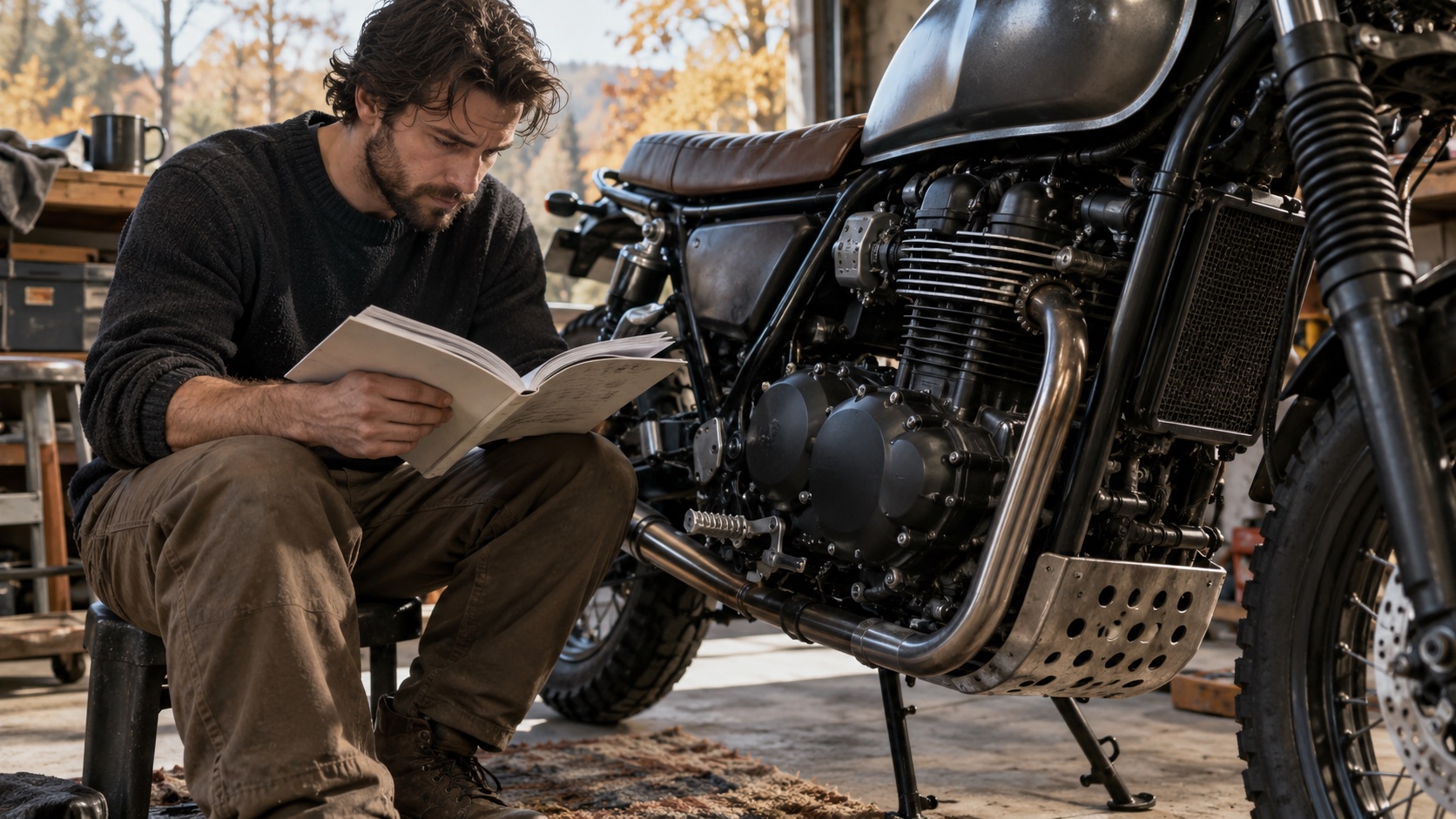
Carburettors need their own routine
A carburetted engine may need a starting enrichment control, commonly called a choke. Its position and the point at which it should be turned off depend on the motorcycle and air temperature. Follow that procedure instead of holding high revs to keep the engine alive.
If the bike still stalls after the specified routine, responds poorly or needs enrichment throughout the journey, investigate a fault. Adding more idle time every morning is not a substitute for maintenance.
Ride smoothly while the bike settles
Avoid high revs and heavy throttle at first. Equally, do not ask the engine to pull hard from very low revs in a tall gear. Choose a lower gear so it responds smoothly. A single RPM limit cannot sensibly cover every motorcycle.
Tyres, brakes and the rider do not become ready for brisk riding just because the engine idled outside the house. On a cold morning, leave room for a gradual start to the whole journey.
More idling is not always kinder
Extended fast idling can overheat some engines, particularly where cooling depends heavily on moving air. Never leave a running motorcycle unattended or warm it up inside a garage, even with the door open. Exhaust contains dangerous carbon monoxide.
If an oil-pressure warning remains on, a sharp new noise appears or a fluid leak is visible, stop the engine and address the fault. Waiting longer will not fix it. On a healthy motorcycle, the useful routine is a correct start followed by considerate riding.