Articles
Your first motorcycle group ride: how to keep it relaxed
Where should you ride, how much space do you need, and what if a red light splits the group? A practical guide to enjoying the ride without chasing anyone.
 fruskate
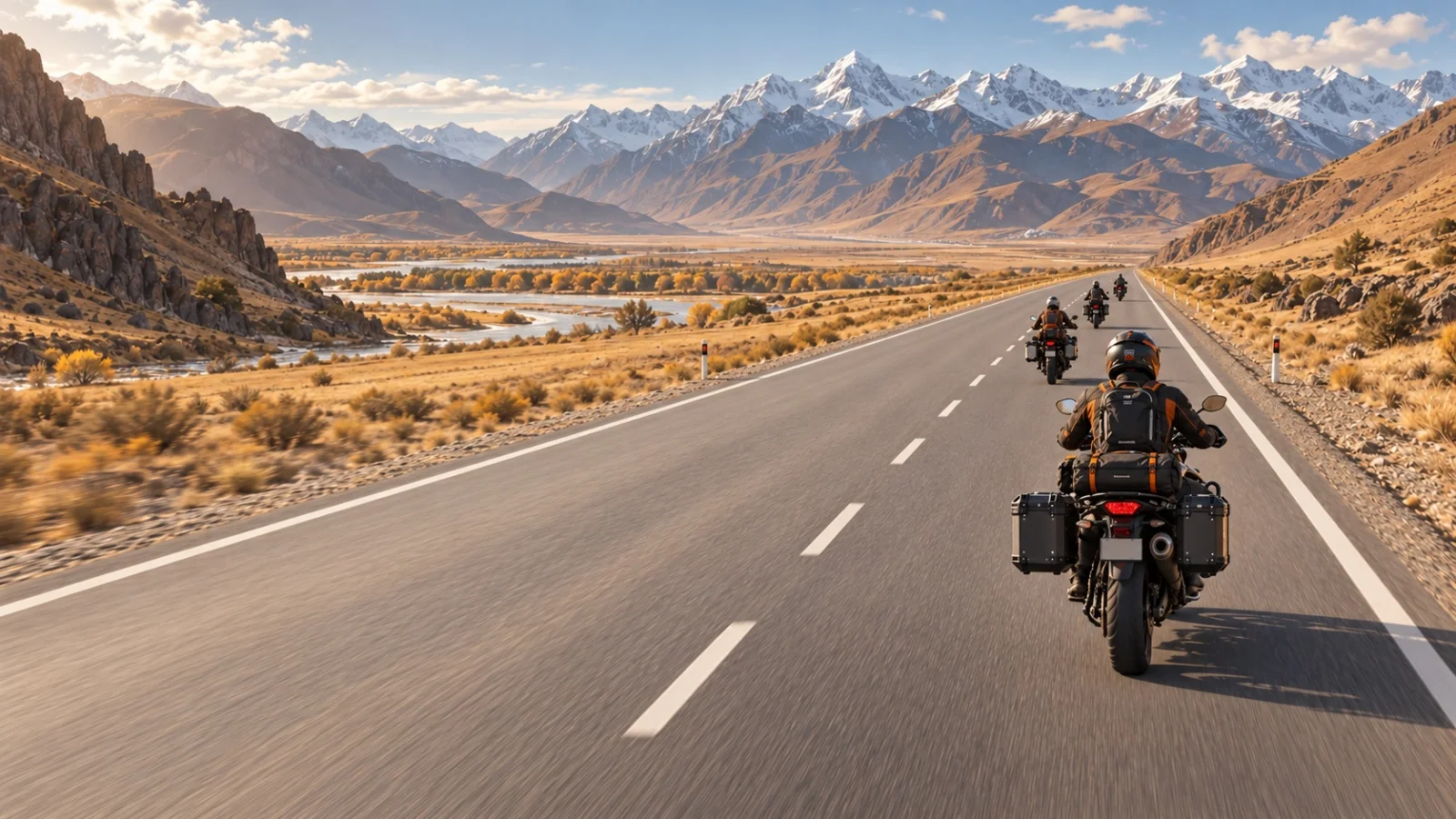
Everyone has fuel, the bikes are lined up, and the route sounds straightforward. Then the ride starts. One rider brakes for a bend, another passes a car, and half the group disappears through a green light. Suddenly, keeping up feels like your job.
It isn't a race to stay together. Each rider makes their own decisions, and a well-run group leaves room for that. You still choose whether a pass is safe, even when the leader has already gone.
Sort out the small things before leaving
Five minutes in the car park can save a lot of confusion later. Find out the route, fuel stops and meeting point if the group splits. Save the organiser's number and, for a mountain ride, a map you can use offline.
If this is your first group ride, say so. Agree on a comfortable pace, hand signals and how to report a problem. Riders without intercoms need the same information as everyone else. Check fuel, tyres, brakes, lights and luggage; proper riding gear, rest and sobriety still matter.
Where should a new rider go?
Usually nearer the front. The back of a group often gets a stop-start rhythm as small gaps turn into rounds of accelerating and braking. An experienced lead rider sets a manageable pace; an experienced sweep rider at the back notices anyone who falls behind.
Neither role includes blocking junctions or pushing cars out of the way. For a large turnout, smaller groups with their own leads and sweeps are easier to organise. MSF suggests groups of five to seven bikes; that's a planning guide, not a traffic rule.
Leave space, even when the formation looks tidy
A staggered formation can work on a straight, sufficiently wide road with good visibility. Alternate left and right positions within one lane, offset from one another. Don't ride handlebar to handlebar: both riders need room to avoid a hazard.
Move to single file for bends, narrow or rough roads, poor visibility, and road entrances or exits. Choose your own safe line instead of holding a staggered position at all costs. The cover is an illustration of a ride, not a diagram of safe spacing.
In good conditions, MSF recommends at least two seconds behind the bike on your own line. In a staggered formation, allow at least one second to the bike diagonally ahead as well; that doesn't replace the two-second gap on your line. In single file, leave at least two seconds to the rider ahead. Rain, darkness, poor surfaces, fatigue and extra load call for more room.
Use a fixed landmark to check: start counting as the rider ahead passes it. If you reach it too soon, ease off smoothly. Look beyond their rear wheel, so their brake light isn't your only view of what happens next.
A pass is yours to judge
The leader passing a car doesn't mean the road will still be clear when you get there. Check markings, oncoming traffic, mirrors and your blind spot. If there isn't a safe gap, wait. Complete passes individually and leave room for the next rider while keeping a safe, legal speed.
Don't swap positions within the group on the move. If a car comes between riders, give it space rather than trying to force it out. Agreed hand signals help, but only relay them when you can keep control of the bike; use indicators and follow local traffic rules.
Being separated is normal
A red light is still a red light when your friends are on the other side. Stop, follow the agreed route and meet at the planned safe place. If you need a map or a phone call, pull out of traffic safely first.
For a breakdown, signal and stop somewhere safe. The sweep helps according to the plan; everyone else gathers off the road rather than crowding around a bike in traffic. For an injury or immediate danger, contact local emergency services and give your location.
You're allowed to leave early or decide the pace isn't for you. Tell the lead or sweep, preferably at a stop, so nobody starts looking for a missing rider. Find a suitable group through MotoASIA's club directory and ask about the ride beforehand. A good day out shouldn't require proving anything.
Further reading: MSF's group riding guide, NHTSA's rider preparation advice and the group riding training module. Local traffic law applies; an instructor can help you practise the riding skills.